
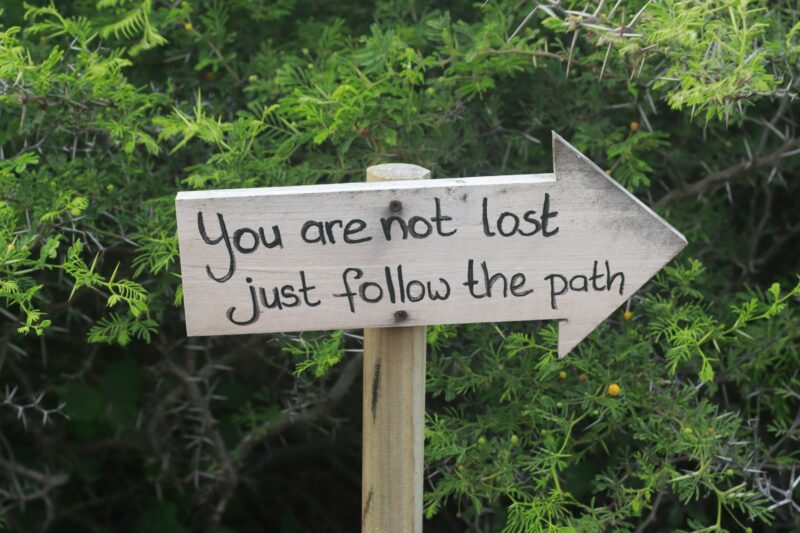
I have not written anything in any places other than my journal and my private messages to lovers and family and friends. I have been nursing my emotional wounds, and then nursing my physical body through so many aftermaths. I have been trying not to die. I have been working very hard at finding and embodying joy, and I think some of you know how difficult it is to even correctly identify what joy looks like when everything in you wants to lie on the ground and let yourself crumble into dust.
you have loved someone with your whole heart; you have devoted yourself to them
The first component to grief, necessarily, is love.
“Grief, I’ve learned, is really just love. It’s all the love you want to give, but cannot. All that unspent love gathers up in the corners of your eyes, the lump in your throat, and in that hollow part of your chest. Grief is just love with no place to go.” — Jamie Anderson
In order for the grief to become so large that it is entwined throughout your body, your breath, your waking world, and even your dreams, it must first be a love so strong that it can carry you through the world wherever you go.
Since I first had a child (by which I mean, my first biological child that I gave birth to), I have understood the power and terror of all-encompassing love. Once I became a parent, with no memory of conscious choice of it, I became a person for whom the identity of ‘mother’ was deeply a part of my self. It expressed itself in me as nurturing, as courage, as protection, as a willingness to do hard things; yet also as fear, as moral compromise, as desperation.
I have been in love many times, and this love is also a strong and active force that leads me into devotion (and sometimes obsession); and yet it is not the same as the love I have for my children. Each child I have raised has been so important to me that I have given everything I had for them time and time again. This love has been a part of me for such a long time now, beginning early in my young adulthood. If you cut me down like a tree in the woods to see the rings that are a record of my life, on every one would be written the word mother.
your heart has inevitably broken; to love is to give permission to wound
Love, when given freely and openly, with a heart aware and even afraid of what may happen, invites the possibility of pain. Love holds within it the acceptance of loss.
I have found that in me, the love I have for my children is less guarded than the love I have for any other person in my life. I have been so devoted to them, so fascinated by them, and so determined to be the kind of parent they each needed. I have changed myself to be in better relationships with them. I have chosen to do hard things because it would benefit them, or at least because I believed that it would.
And like any person that I know and love, my children are each people in their own right, with autonomy and the freedom to choose. I do not control them, and this is sometimes a bitter lesson when children are becoming grownups; not for a desire to force them to do what I believe is best, but because I must let them make their choices even when I can see it will lead to pain or chaos or unnecessary difficulty. (And even here in this paragraph, saying that I need to ‘let them’ make choices is inherently misleading; I am not in charge of whether or not they get to make choices. What I actually need is to have the strength it takes to stop myself trying to take their choice away when I am afraid for them.)
In 2019, my second eldest child turned eighteen, and on his birthday I let him go willingly away from me, into the world he wanted to inhabit on his own terms, which included not living with me any more. This was, at that point in my life, the hardest thing I’d ever had to do.
In 2025, after I fled the states and began my long adventure in Australia and Thailand, my second youngest child, who still lives in the states with his dad, got very angry with me and cut off contact. I am holding onto grief about this that goes all the way back to the physical and emotional trauma I experienced around his birth (it included one of my handful of near death experiences). I am holding onto grief about this that reminds me of other grief about other parent-child relationships of mine–some in which I am the parent, and some in which I am the child.
This year my middle child, recently twenty years old, chose to leave Australia to return to the states, after months of trying to make it work here. I am so recently and profoundly in my grief about this that I have barely been able to think my way around the edges of it. It is still fresh and it hurts so much that it is frightening at times.
the wound in your heart has festered; the ache where it lives becomes your entire life
In late January and February, we had some of the hardest times we’ve ever experienced as a blended family. All the cracks in our commitments to one another came to light, and each of us had a profoundly awful time, played out in different ways, pulling hard on our traumas and old griefs and fears. We’ve come through it, and continue to work hard at being in right relationship with one another, but the work we did and the reasons for it have all left their marks on us, and we are not the same as we were before it happened. I think we are a lot stronger for it. We are more honest with one another, and more willing to demonstrate our commitment to one another. And also, we are all a little more wounded.
In February, I had a very strange thing happen that I am categorizing as another (near) death experience. My mental health took on a decidedly darker shade after that, because I didn’t know how to cope with it and I wasn’t able to lean into my partners for support since we were all still suffering so much.
In early March, I had my first hospital trip here in Australia. I was walking in downtown Melbourne with Ash, and I suddenly got so dizzy and disoriented that I had to let myself fall onto the sidewalk, and I couldn’t get up. I was having what I think was a really bad POTS flare, and I couldn’t get up because my vision was tipping and spinning. The paramedics were wonderful and the hospital was lovely and my blood pressure was fucking awful. I think my highest numbers were something like 187 over 130, and we are all surprised that I hadn’t had a stroke. I have been calling it ‘my episode,’ because I’m not sure what else to say. It wasn’t a stroke, for which I am grateful, but it almost was.
And then I rested and rested and rested. I was bored to literal tears. I watched my entire family working harder to fill the gaps my illness was leaving, and it filled me with extra grief and so much frustration even as I tried to rest enough to earn back the things I felt that I was losing.
left unchecked, the grief may kill you; perhaps you’ve already died
By the end of April, I was able to drive again and help run errands and share household chores, but in late May I had another episode. Not exactly like the first one. This one was more of sudden depleted strength in the legs, a heart rate that plummeted and then spiked, brain fog, and difficulty coherently thinking of words and then being able to say them aloud. And I went to hospital again, although this time my blood pressure wasn’t a problem. In fact, nothing was a problem: all the tests they routinely run are full of good and healthy numbers. (My next step is to see a cardiologist, because we will figure it out.)
I was scared enough and in my multiple overlapping griefs so much that I was waking up each day feeling already submerged. Like I barely woke up in time to stop from drowning altogether. Like there was already water in my lungs.
And every day I would hear my alarm to take my morning meds and roll over to reach my bedside table, swallow them with water, and then lie there feeling a combination of uselessness and shame, which generally became anger at myself and anger at my chronic illnesses and anger at my circumstances. It became fear that showed up as insecure attachment to my partners. Once I started to feel a little less sick again, I was really, really emotionally dysregulated and I started to communicate badly, which caused harm to my people and my relationships, which caused me to feel further shame and anger; and because my nervous system was being put through the wringer, I kept flaring. None of the flares have been bad enough to warrant another hospital trip, but they still get really close. I am still waiting to get better enough again.
Then one of my partners firmly (not so gently) reminded me of all the things I’ve already written here today, and made it very obvious to me that the choice before me was to keep going like this and probably die of grief, or do the hard thing and remember how to reach for joy instead.
should you choose to stay dead, farewell and godspeed; should you choose to live, prepare yourself for the Work.
I want to say right now that I do not blame anyone who has succumbed to their grief. I don’t think that it is immoral to die of your grief. I don’t think people who die of broken hearts should be vilified, although I also don’t think that it’s healthy to romanticize the act of dying from grief. I think both choices are terrible in their own way, and I think each choice also holds peace within it, which is a thing it is very hard to deny oneself.
I think sometimes it seems like our bodies simply go on living without us needing to do anything conscious to choose it. When we sleep, we still breathe, our hearts still beat. When we are eating or laughing or crying or making love or screaming or running or lying down, still our hearts beat and the blood pumps and oxygen enters our lungs and we are, conscious of it or no, still alive.
But grief can turn our bodies inward in such a way that we collapse in on ourselves. Grief will cause a heart to break in a million tiny ways, including physical manifestations of sorrow. Grief will kill you, not because it is cruel, but because we have lost the desire to remain alive in the circumstances of our grief. This is, as well, largely subconscious. We do not have to think thoughts of death on purpose to give our grief a direction to act upon us. We can merely (merely?) be suffused with the experience of grief to the point where we forsake life, and eventually it will be true that we are no longer alive.
But to remain alive–this does require conscious effort. Choosing to be alive is active, and it is much harder than remaining under the weight of grief, especially when it is so heavy. Choosing to live is also choosing grief: in a way that learns how to dance with it, learn from it, cherish it, and release it from time to time. (You will not lose your grief, but you may become more trusting that it will not also abandon you.)
I decided that I want to live more than I want to not exist.
If you’ve never experienced suicidal ideation, this sentence might read as very silly. For me, when I need help it is because I have begun the process of actively trying to give up on everything because I just don’t want to exist any more.
So, to decide that I want to live means that I am choosing the hard work of finding where the love and the joy and the tiny moments of whimsy can be found, so that I can pursue them. Not so that they can passively find me. The reason this is hard to do is that I have only so much effort to give, because I am chronically ill, and because I am still encumbered by multiple griefs, and yet I must choose each day to give some of that effort toward finding and experiencing joy.
For me it is worth it. For me, I believe that I can be alive for decades and decades from now. I believe that I will see my children become as old as I am now (not that I think I am actually old, lol). I believe that I will someday soon go to Ireland again and live there with my family. I want to live. And so I will choose to live with my grief because it means that I can also live with my joy.
It is Pride month, so my contribution to it all is my continued queer existence. I may be full of grief and anger and love, but I am also full of kink, shitposts, and queerness.
Lastly, I know I like to share lyrics with you, or a poem at the end of my posts, but today I wanted to finally write this out even if I had nothing to add as an epilogue besides this: I hope you and your grief are well and that you are still breathing and your blood is still pumping. And for my queer community: I’m so proud to be part of who we are.
xox,
Nix
featured photo by karina trinidad on Unsplash

Thank you for sharing this vulnerable and beautiful reflection.
thank you for being here, Venessa 🖤 it’s so nice to see you